Chapter 6 — The brainstem
Where space is computed
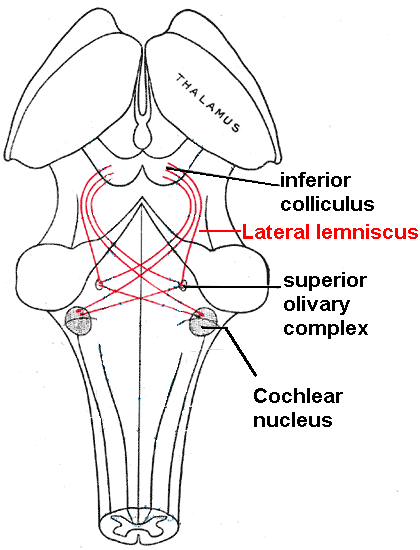
The auditory nerve carries 30,000 channels of spike trains from one cochlea into the cochlear nucleus of the same-side brainstem. From there, the auditory pathway fans out into multiple parallel streams, converges in the superior olivary complex of both sides, climbs to the inferior colliculus in the midbrain, and only then proceeds to the thalamus and cortex. Most of what we will discuss in this movement happens in a region of brainstem the size of a small grape, sitting on top of the medulla.
What does this part of the brain do? In short: it extracts spatial location from interaural differences, with a precision that has shaped the architecture of every mammalian and bird auditory brainstem ever studied. The processing required to resolve sub-millisecond timing differences pushes neural hardware to its physical limits, and the result is a model of computation that has fascinated neuroscientists since the 1940s.